How Testing, Segmentation & Storytelling Transformed a Direct Mail Program
Everyone said direct mail was dead. These campaigns proved them wrong.
The program wasn't broken, it was just being treated like a formality. Campaigns went out, donations came in, and nobody asked too many questions. I changed that approach, rebuilding the program around segmentation, testing, and storytelling that gave donors a reason to act.
I led campaigns end-to-end, owning strategy, messaging, and performance optimization, treating mail as a measurable, test-and-learn channel rather than a one-off tactic.
6.83% Increase in Total Direct Mail Donations
$4.99 Average Direct Mail ROI
14.13% Increase in Average Gift Size
17% of total fundraising revenue (all sources)
31% of individual giving was generated through direct mail
Results
Strategy
-
Rather than sending the same appeal to everyone, the mailing list was segmented by donor behavior and lifecycle stage. Active donors were encouraged to increase their giving while lapsing donors received approachable gift amounts designed to keep them engaged before they dropped off entirely.Description text goes here
-
Rather than sending the same appeal to everyone, the mailing list was segmented by donor behavior and lifecycle stage. Active donors were encouraged to increase their giving while lapsing donors received approachable gift amounts designed to keep them engaged before they dropped off entirely.
-
An editorial calendar was built around donor behavior research and historical trends, deliberately avoiding the summer dead zone and spacing appeals so supporters never received multiple asks at once. Vendor relationships were managed to keep production and delivery on schedule so every campaign dropped when it was supposed to.
-
Multiple response mechanisms were built into every appeal, giving donors the option to give however was easiest for them, whether by reply card with envelope, QR code, online, or phone. The fewer barriers between a donor and their gift, the better the response.
-
Direct mail didn't operate in isolation. Email, social, and paid media were timed to follow shortly after mail dropped, extending campaign reach and providing multiple touchpoints for donors who hadn't yet responded to the original piece.
-
Formats, messaging, elements, and inclusions were continuously A/B tested throughout the program to identify what drove the strongest response rates and ROI across different donor segments.
Raising $200K to Expand Foster Care Services
The same ask doesn't work for every donor. Enter: personalization.
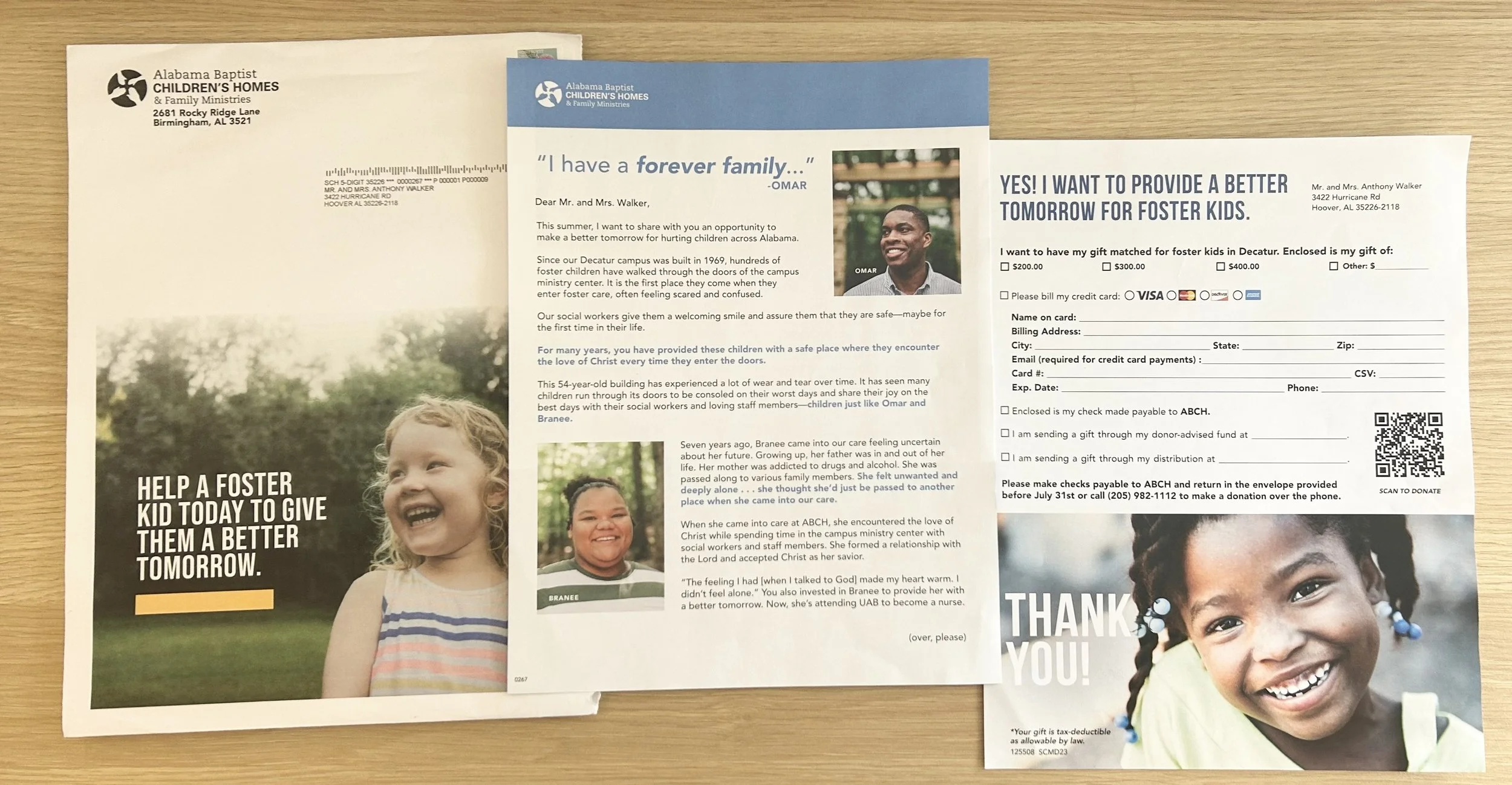
When ABCH needed to raise $200,000 to renovate a campus location, the first place foster kids enter care, build relationships with staff, and receive life-changing counseling services, I developed a segmented direct mail campaign anchored by a $50,000 matching gift.
Rather than sending one version to everyone, I created two distinct appeals tailored to mid-level and major donors, with messaging and ask amounts calibrated to where each audience was in their giving journey.
$5.68 ROI from targeted Mid-level Donors
$16.01 ROI from targeted Major Donors
The campaign met its full funding goal
Cami's Story: Proving the Lifelong Impact of a Gift
The best way to get attention is to do something unexpected.
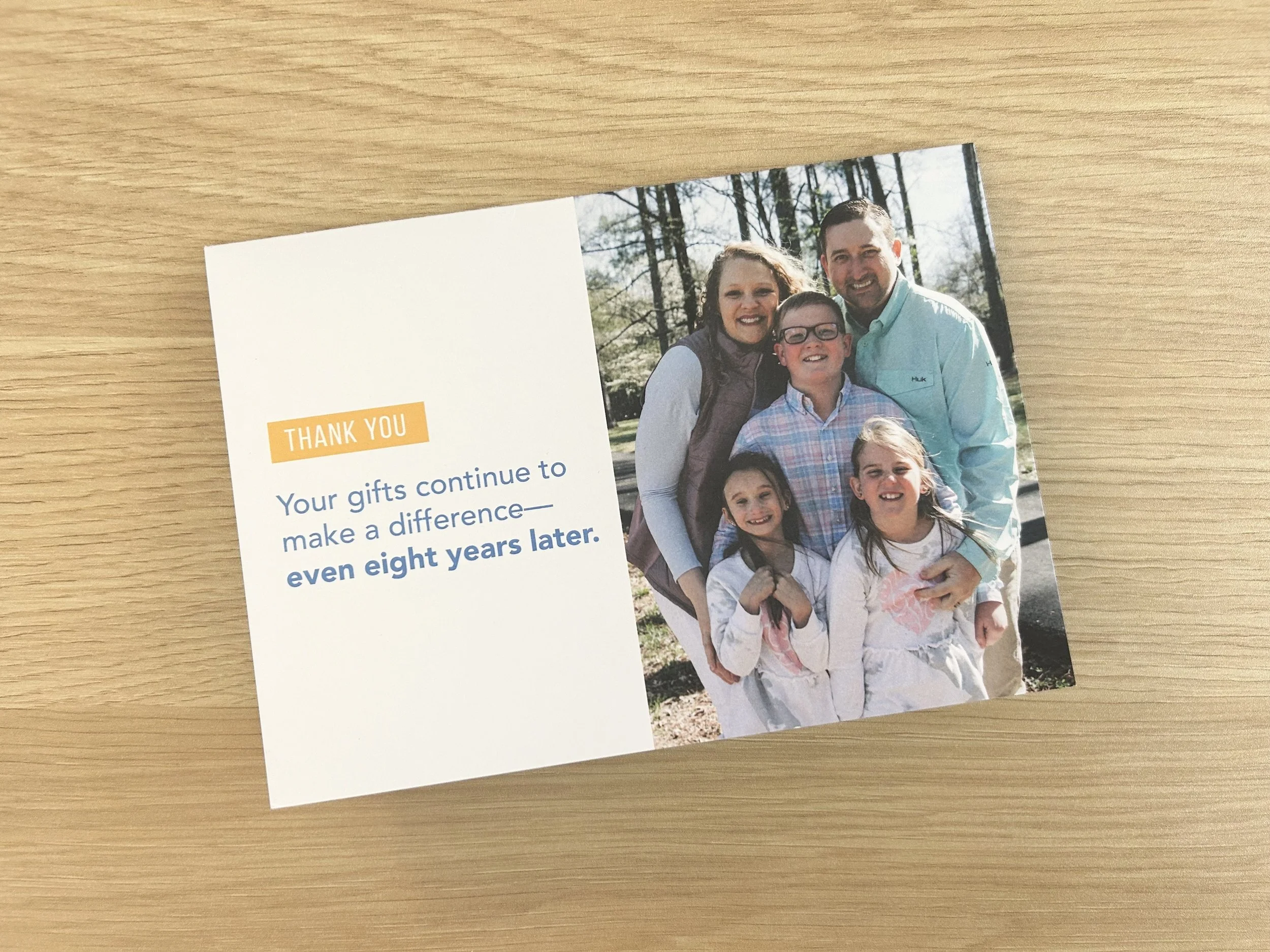
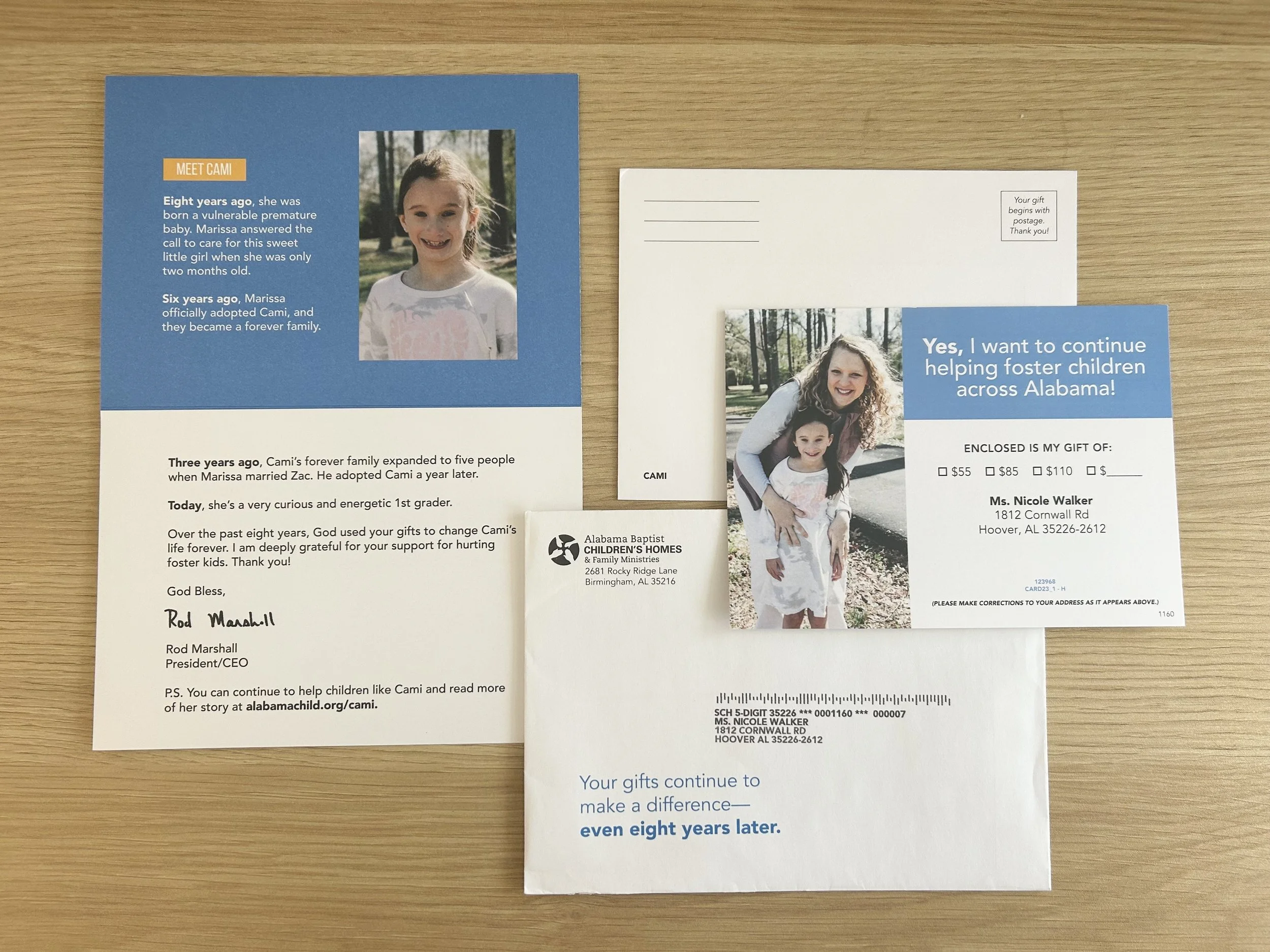
ABCH historically relied on long-form letters for every appeal. I tested a 5x7 card format featuring a concise thank you message and a short impact story centered on Cami, a child adopted eight years earlier.
The goal was to show donors the lifelong difference their giving had already made in her life and inspire them to keep investing in kids who needed that same chance at a better tomorrow.
The shorter format was a deliberate choice to reduce friction, improve response rate, and break the pattern supporters had come to expect.
4.36% Response Rate
$9.96 ROI
One of the highest-performing appeals in the program